Price War: Our Industrial Infrastructure at the Heart of Our Resilience – Luc Cusson, Eng., MBA

An article by Luc Cusson, Eng., MBA, Partner and VP – Engineering and Business Development, Frare Gallant
As the administration of our southern neighbor imposes a trade war on us, we are living through a period of instability and unpredictability that could last for several years.
Now more than ever, we must demonstrate resilience and support our local production. In fact, various levels of government have announced several assistance programs for affected sectors and are increasingly calling on people to buy local.
However, consuming locally necessarily means producing and processing right here at home. This requires modern industrial infrastructure tailored to the needs of businesses, enabling them to be more productive, efficient, and competitive so that our products can gain a larger share of our own market while also continuing to make an impact abroad.
A Highly Strategic Sector That Is Lagging Behind
On the ground, we see significant needs: increasing production capacity, further integrating automation, and developing facilities capable of evolving with the needs of businesses and markets, among other things…
The data should give us pause. In a study published last May, the Institut du Québec found that between 1997 and 2024, the stock of manufacturing capital—that is, the total value of industrial buildings and machinery—had declined by 5.3% in Quebec and 8.5% in Canada, while it had grown by 54% in the United States.
This lag cannot be ignored. When a company wishes to repatriate part or all of its supply chain or increase its production capacity, it must be able to rely on suitable production and processing infrastructure. However, such infrastructure cannot be built overnight and often requires public support.
Producing and processing more here requires the ability to build here.
We must support and accelerate the implementation of industrial and agro-industrial projects, support the modernization of existing facilities, and ensure that companies wishing to invest here can bring their projects to fruition.
These investments have very tangible benefits: they increase our production capacity, improve the productivity of our businesses, and help maintain and create jobs in our region.
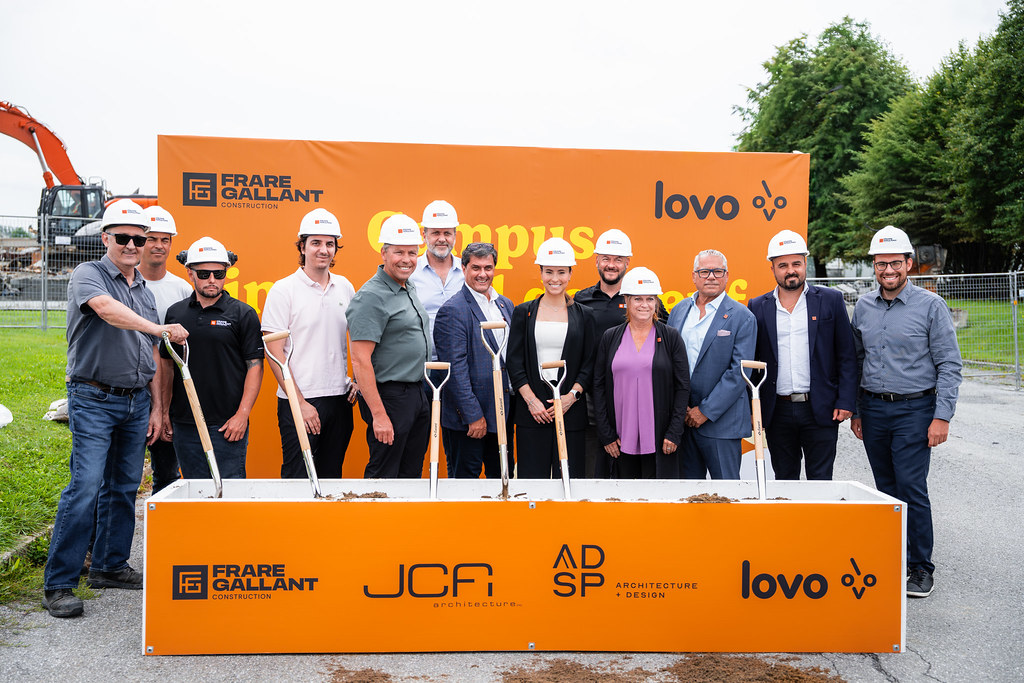
Projects such as Lovo’s Industrial Egg Campus in Saint-Hyacinthe—whose construction was launched a few days ago by Frare Gallant—are a good example. Once the complex is completed, Lovo will be able to triple its local egg production capacity and continue developing new value-added products.
As the general contractor responsible for its construction, we are proud to contribute to a project of this magnitude and, above all, to the expansion of agri-food processing capacity.
The current trade war reminds us just how vulnerable our economy remains. We must therefore focus on what we can control: strengthening our industrial base and giving businesses the means to carry out their modernization and expansion projects.
The various levels of government have an important role to play in facilitating these investments and accelerating the completion of industrial projects. This is how we will be able to reduce our dependence on foreign markets and better prepare for future periods of uncertainty.